In today’s fast-paced warehousing and logistics environments, precision, safety and reliability are fundamental requirements. As facilities increase in operational complexity and make greater use of vertical space, the capability to transfer goods between levels efficiently becomes essential. A well-engineered goods lift is a critical component in achieving this, supporting higher throughput, streamlined workflows and improved overall performance.
The following sections outline the key ways goods lifts contribute to warehouse efficiency, based on industry best practice and the operational standards expected within modern facilities.
1. Faster and More Controlled Vertical Transport
The movement of heavy or bulky items between floors using manual methods or forklifts introduces unnecessary delays, inconsistencies and safety concerns. A goods lift provides a controlled and predictable means of vertical transport through:
- Load capacities designed for pallets, roll cages and large or irregular items
- Consistent and reliable travel times
- Reduced forklift movements, lowering congestion within operational zones
This level of control supports continuous workflow, particularly in high-volume distribution centres where time-critical performance is required.
2. Optimised Use of Vertical Space and Increased Throughput
Expanding upwards is one of the most effective ways for warehouses to increase capacity without extending their footprint. Goods lifts enable this by ensuring that upper levels function at the same operational standard as ground-floor areas. Benefits include:
- Full utilisation of vertical storage space
- Distributed picking, packing and replenishment activities across multiple levels
- Faster and more predictable stock replenishment
For facilities with limited available land, a goods lift is often pivotal in supporting capacity growth while maintaining high productivity.
3. Enhanced Safety Standards and Reduced Manual Handling Risks
Manual handling is a leading cause of workplace injuries, particularly in environments where goods are moved between floors. Goods lifts significantly reduce these risks by:
- Eliminating the need to carry heavy loads on stairs or platforms
- Reducing forklift travel between levels, a major source of accidents
- Providing enclosed, compliant and secure movement of goods
Certain lift configurations can also accommodate an attendant travelling with the load, supporting the safe handling of large, fragile or specialised items.
4. Seamless Integration With Existing Structures and Mezzanine Levels
Modern goods lifts, including free-standing and no-pit designs, offer exceptional adaptability for both new and existing facilities. Key advantages include:
- No requirement for a machine room or lift pit
- Compact shaft configurations suitable for constrained layouts
- Straightforward retrofitting in older buildings or facilities undergoing phased expansion
This adaptability allows operators to introduce enhanced material flow capabilities without extensive construction work or prolonged operational downtime.
5. Improved Order Fulfilment and Workflow Coordination
When placed strategically within a facility, goods lifts play a central role in harmonising operational processes. They support:
- More efficient movement between picking, packing and despatch areas
- Reliable replenishment of picking zones
- Reduced queuing and congestion during peak workflows
In well-designed layouts, a goods lift becomes an integral element of an optimised warehouse operation, supporting continuous and coordinated flow.
6. Compatibility With Automation and Advanced Logistics Technologies
As automated solutions such as AGVs and AMRs become more prevalent, vertical transport must support these systems. Goods lifts can be configured to provide:
- Automated call and despatch functionality
- Integration with warehouse management or control systems
- Autonomous operation suitable for robotic equipment
This ensures that vertical transport remains aligned with broader automation strategies, supporting long-term digital transformation.
7. Lower Labour Costs and Higher Operational Productivity
By reducing the need for manual transport of goods between floors, goods lifts deliver clear operational efficiencies:
- Staff can focus on higher-value tasks
- Forklift usage and associated costs are reduced
- Predictable lift cycles support more accurate labour planning
These efficiencies contribute to lower overall operational costs and help achieve a faster return on investment.
Optimize Warehouse Efficiency with Lödige Industries Goods Lifts
At Lödige Industries, we understand that seamless vertical transport is critical to a high-performing warehouse. Our expertly engineered goods lifts are designed to enhance operational efficiency, minimize manual handling, and integrate effortlessly with advanced automation systems. More than just equipment, a Lödige goods lift is a strategic asset, delivering reliability, safety, and long-term performance that supports sustainable growth and positions your facility for the future of logistics. Get in touch with us today to upgrade your efficiency.
View more information about goods lifts
Self Storage Reference:
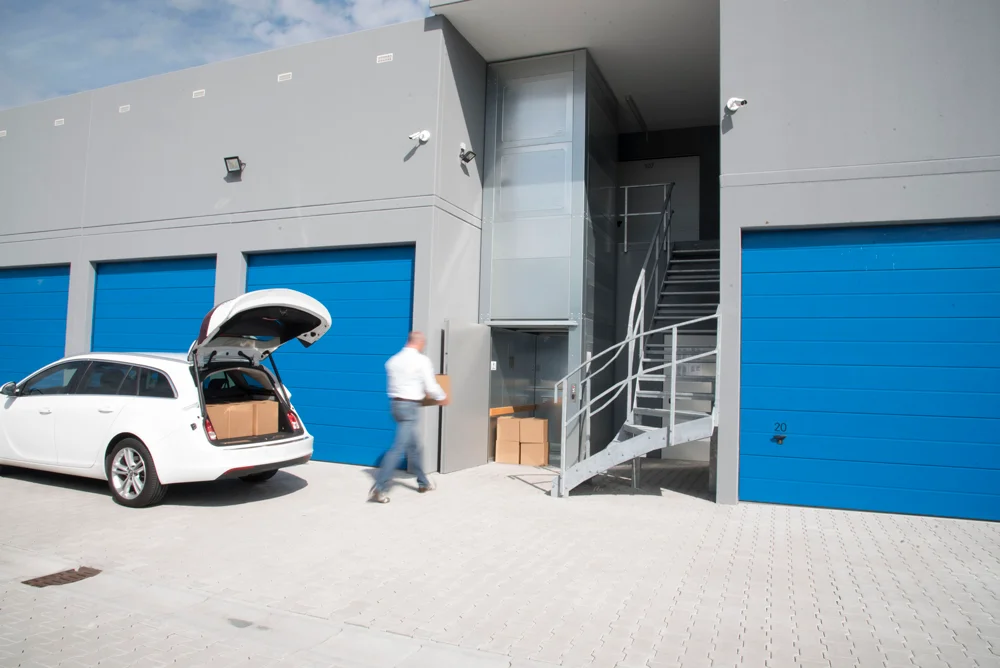
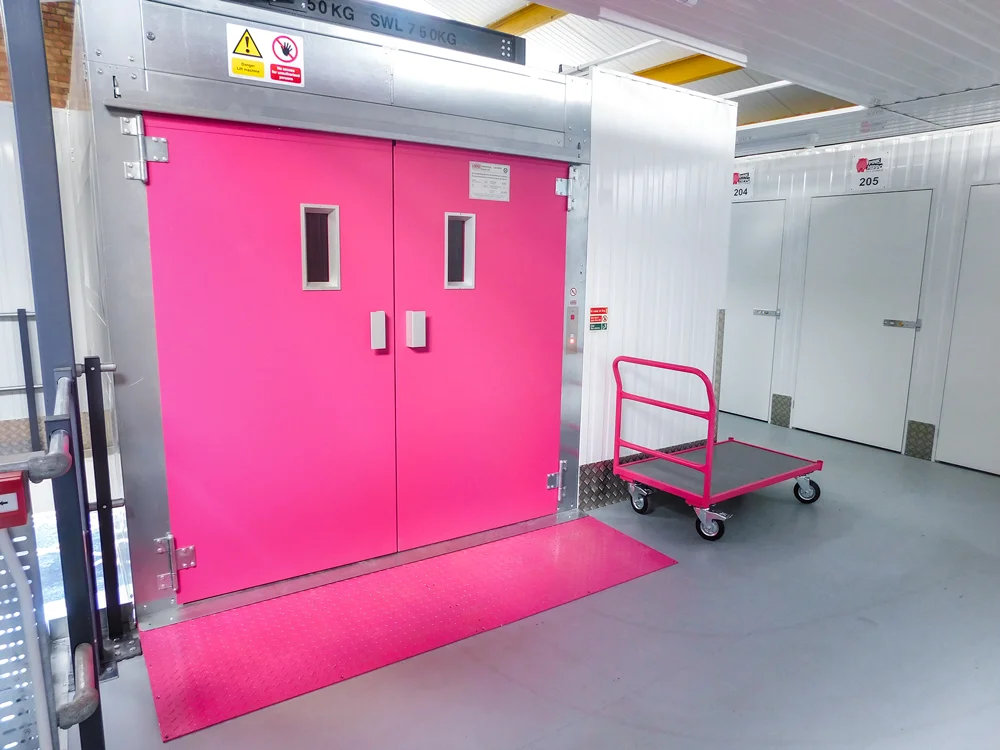
Goods lift for Self Storage Center Pink Hippo in Reading, UK
FAQ
1. What is a goods lift and how does it work?
A goods lift is a vertical transport system designed to move materials, pallets, roll cages or equipment between floors safely and efficiently. Unlike passenger lifts, it is engineered to handle heavy loads and frequent cycles. Goods lifts typically operate using a hydraulic or traction drive system and include safety features such as interlocked doors, enclosed shafts and overload protection.
2. Do I need a pit or machine room for a goods lift?
Many users search for clarification on installation requirements. Modern goods lifts, including modular or free-standing designs, often do not require a lift pit or separate machine room. This makes them suitable for existing buildings, mezzanines, warehouses and industrial sites where structural changes must be minimised. Always check manufacturer specifications, as requirements vary by model and capacity.
3. What weight capacity do goods lifts have?
This is one of the most frequently searched queries. Goods lift capacity varies widely depending on the model and application. Standard capacities range from 500 kg to 3,000 kg, while heavy-duty industrial lifts can handle 10,000 kg or more. Choosing the right capacity depends on the type of loads, pallet sizes, handling equipment used and the required duty cycle.
4. What regulations apply to goods lifts in the UK?
Goods lifts are regulated under the Machinery Directive and relevant British and European standards, rather than the Lift Regulations that govern passenger lifts. Requirements typically include conformity assessments, CE or UKCA marking, safe operating controls, interlocked doors and scheduled maintenance. Facilities must also follow LOLER (Lifting Operations and Lifting Equipment Regulations) obligations for inspection and safe use.